
Fursuit eyes explained: 3D follow-me vs 2D, vision and glasses
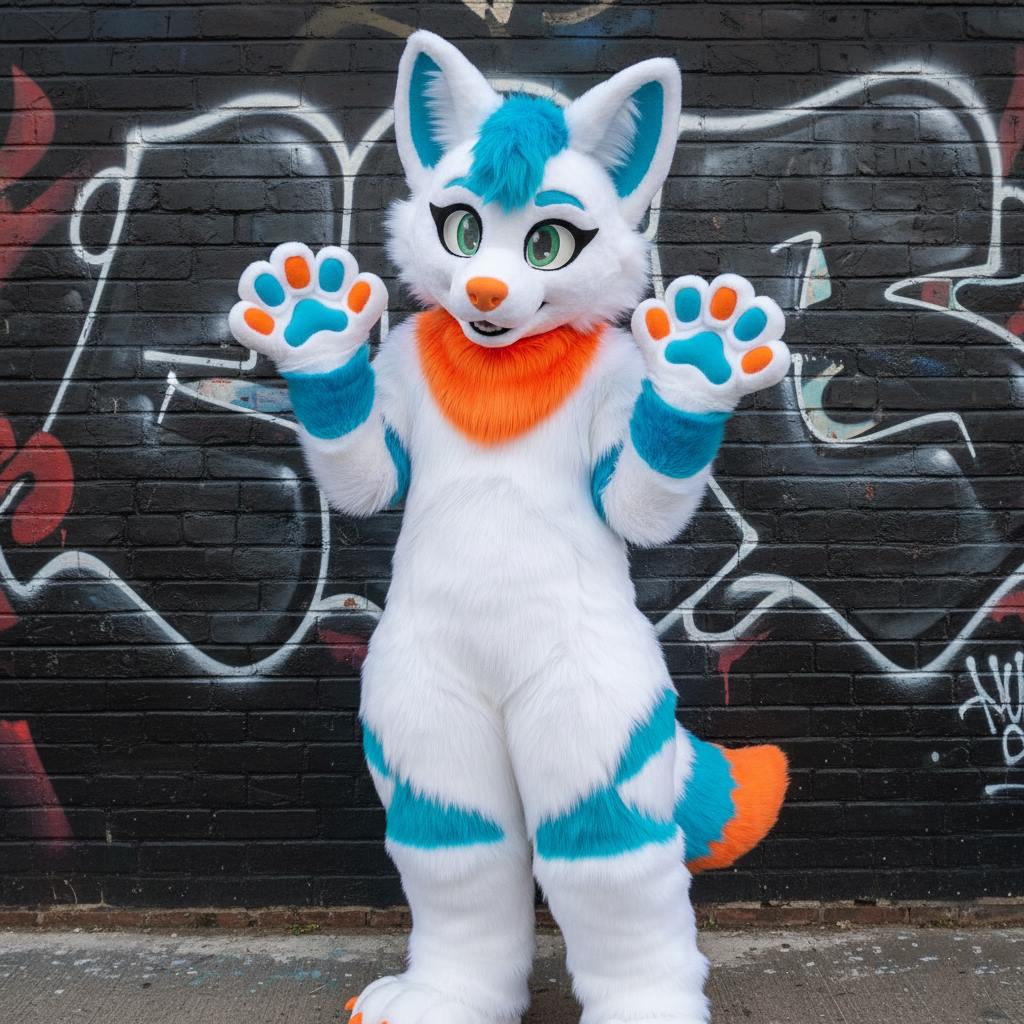
The eyes are the first thing people look at on a fursuit, and the first thing you notice when you put the head on. They decide whether your character seems to look back at the camera, how much of the world you can see, and how comfortable a long day in suit feels. Yet “follow-me eyes”, “3D eyes” and “2D eyes” are often listed on commission pages without any explanation. This guide covers how follow-me eyes actually work, how 3D and 2D eyes compare, where you really see out of a head, what to do if you wear glasses, and the questions to settle with your maker before the head is built.
How follow-me eyes actually work
Follow-me eyes don’t move. There are no motors and no moving parts. The effect is an optical illusion built into the shape of the eye.
On a 3D follow-me eye, the iris sits in the middle of an eye that is set back, or recessed, into the head. A raised rim, an eyelid or the wall of the socket hides part of the eye’s edge. When you look at the head from straight on, you see the iris in the centre. When you step to one side, perspective changes which part of the eye is hidden, and the iris still appears to point roughly towards you. The brain reads that as “the character is looking at me”, which is why a good set of follow-me eyes seems to watch the camera from almost any angle.
Three things make the effect stronger or weaker:
- Centring. The iris needs to sit in the centre of the eye. If it is set off to one side, the illusion breaks and the character can look cross-eyed or as if it is looking past you.
- Depth. A deeper socket, or a taller rim and eyelid, hides more of the edge and makes the eyes “follow” more. Too shallow and they look flat.
- Shape. Round irises are the easiest. Slit pupils, star pupils and other stylised shapes can still work when they are centred and the socket has enough depth.
3D vs 2D fursuit eyes at a glance
Most commission pages offer two broad types. Here is how they compare in general. Every maker builds eyes slightly differently, so treat this as a guide to the questions, not a rule.
| What you notice | 3D follow-me eyes | 2D (flat) eyes |
|---|---|---|
| How they’re shaped | Recessed eye with a rim, eyelid or socket wall that creates depth | Flat or nearly flat eye set into the face |
| The “looking at you” effect | Strong; the eyes seem to follow viewers and cameras | Little or none; the eyes look in one fixed direction |
| In photos | Look engaged from most angles, which is why many suiters love them for cons and photoshoots | Look best from the angle the eyes were designed for |
| Character look | Natural fit for most toony, semi-toony and expressive characters | Can suit graphic, very flat or anime-like art styles, or a character drawn with flat eyes on the ref sheet |
| Vision | Depends on where the maker places your vision ports, not on the label alone | Also depends on the build; ask where you will see from |
| Care | Raised edges and paint need gentle handling; keep them dry | Painted or printed surfaces can lift if they get wet or rubbed |
The honest summary: choose eyes for how your character should look, then ask the maker how you will see. The two questions are linked but they are not the same thing.
Where you actually see out of a fursuit head
One of the most common questions from people who have never worn a head is “how do you see in that?” The answer is that the eyes you see from outside are usually not exactly where your own eyes are. The maker builds hidden vision areas, often covered with mesh, into the parts of the face that line up with yours. Depending on the design, that can be:
- Through the eyes. On many toony and big-eyed heads you look through mesh in the eye itself, often at the pupil, which can be dark mesh you can see through.
- Through the tear ducts. Realistic heads often have small eyes, so vision is hidden in the inner corners of the eyes instead.
- Through the mouth or nose area. Some heads use an open mouth or mesh under the muzzle, especially for looking down at your feet.
Every head limits your view in some way, especially downwards and to the sides. A long snout hides the ground in front of you, and dark mesh gets harder to see through at night. That’s why experienced suiters still use a handler in crowds and in the dark, as we explain in our guide to trick-or-treating in a fursuit.
What changes how well you can see
Two heads with the same “3D follow-me eyes” label can feel completely different to wear. These are the things that make the difference:
- Where the vision ports sit compared with your eyes. If they line up, you look straight out. If they are too high, too low or too far apart, you end up tilting the head to see.
- Fit. A loose head shifts when you turn, so the vision areas drift away from your eyes. A snug, stable fit keeps them in place.
- Eye size and the art style. Big eyes usually give more room for vision. Small realistic eyes leave less, which is why those heads often use the tear ducts.
- The mesh. Mesh hides your face and lets air through. Finer or more heavily painted mesh can look cleaner from outside but is harder to see through.
- Light. Bright daylight is easy. Dim halls, night streets and stage lights make every head harder to see out of.
- Fogging. Warm breath on cool plastic or lenses fogs your view. Airflow, a fan and breaks help.
This is also where custom heads and mass-produced costume heads differ most. Our store-bought vs custom fursuit head comparison covers why one-size heads often have narrow vision.
How to choose eyes for your character, step by step
- Start with the ref sheet. Look at how your character’s eyes are drawn: round or almond, big or small, iris color, pupil shape, highlights, eyelids, eyelashes and any markings around them. If the art shows a few different expressions, pick the one you want the head to wear. Our reference sheet guide explains how to show the eyes clearly.
- Decide the mood. Wide, happy eyes read as friendly, which works well with kids and for photos. Half-closed “sleepy” or slanted eyelids give a calmer or more mischievous look. The eyelid shape changes the character more than most people expect, so mention it.
- Think about where you’ll wear it. Cons, meets, photoshoots and dance competitions all reward eyes that look at the camera, which is where 3D follow-me eyes shine. If you mostly film close-up videos from one angle, or your character is drawn in a very flat style, 2D can be worth discussing.
- Plan for special details. Heterochromia (two different eye colors), slit or shaped pupils, extra highlights, glowing or UV-reactive details and lashes are all worth listing up front, so they are part of the quote rather than an afterthought.
- Say how you see. Do you wear glasses or contact lenses? Are you sensitive to heat or fogging? Do you need to see your feet well, for example for stairs at a con? Put it in your quote notes.
- Confirm it in writing. Your quote should say which eye type the head will have. If you asked for something specific, check that it’s there before you pay a deposit.
Two quick examples. A cheerful toony fox with big round green eyes is a classic fit for 3D follow-me eyes: centred irises, a soft upper lid, and the character will seem to look at every camera. A character drawn in a flat, graphic style, with simple shapes and no shading, might look more like the art with 2D eyes. In both cases, the question that matters for comfort is the same: where will the wearer see from?
Wearing glasses or contact lenses in a fursuit
Glasses come up again and again in fursuit communities. In October 2026 one widely shared post simply asked how to fit glasses inside a fursuit head, and it drew thousands of likes from people with the same problem. The good news is that many suiters wear glasses every time they suit. What helps most:
- Tell your maker before the build. Space for frames is much easier to plan into a new head than to carve out later. Say what kind of frames you wear and whether they are wide.
- Choose a frame that fits. Slim, close-fitting frames are easier to wear under a head than big, wide ones. Some people keep an older, smaller pair just for suiting.
- Keep them in place. A sports strap stops glasses sliding down when you bow, dance or turn quickly.
- Fight fog. Use an anti-fog spray or wipe made for glasses, keep air moving with a head fan if you have one, and take the head off for breaks before the lenses fog completely.
- Practise at home. Wear the head with your glasses for half an hour around the house before a big day, so you know how they behave.
Some wearers switch to contact lenses for suiting, because there are no frames to fit and nothing to fog. Fur and lint near your eyes can be uncomfortable with contacts, so lint-roll the inside of the head and the balaclava first, and always ask your optician whether contacts suit you before you try them for a long day in costume. Never try to fix poor vision with homemade lenses or sharp parts inside a head.
Common eye problems and what usually causes them
| What you notice | Common cause | What to try |
|---|---|---|
| The eyes don’t seem to follow | Iris not centred, shallow socket, or photos taken from an extreme angle | Shoot from about eye level and a few steps back; for a new commission, ask the maker |
| Character looks cross-eyed in photos | Camera too close, or irises set slightly inward | Step back and use a longer zoom instead of a wide phone lens up close |
| Vision fogs up | Warm breath on cool lenses or plastic, little airflow | Anti-fog products, a fan, and more frequent head-off breaks |
| Hard to see at night | Dark mesh and low light | Stay with a handler, stick to lit areas, carry a torch for the ground |
| Can’t see your feet | The snout blocks the view downwards | Tilt the whole head, use handrails, ask your handler about steps |
| View drifts when you turn | Loose fit, so the head moves on your head | Wear the balaclava the head was fitted with; ask your maker about padding |
If a commissioned head has a construction problem with the eyes, report it to the maker promptly. At Fursuit Hub, construction issues reported promptly can be repaired; normal wear, heat damage and unsupervised washing aren’t covered. Details are on our FAQ.
Looking after fursuit eyes
- Keep water off them. “Splash-resistant” helps if you get caught in light rain, but it does not mean waterproof. Never spray cleaner or water onto the eyes.
- Dust gently. Use a soft, dry brush or a clean microfibre cloth. Don’t rub painted or printed areas hard.
- Avoid heat. Don’t leave the head in a hot car, next to a heater or in direct sun for long periods.
- Store it face-up and uncrowded. Put the head on a stand or shelf, or in a roomy box, so nothing presses on the eyes or scratches them.
- Watch them after cons. Look for scratches, lifting paint or loose edges when you unpack, and deal with small issues early.
For the full after-care routine, from airing the lining to storing the head between seasons, read how to clean and store a fursuit.
Checklist: eye questions to settle before you commission
- ☐ Do I want 3D follow-me eyes or 2D eyes, and does my ref sheet show the eyes clearly?
- ☐ Iris and pupil color, pupil shape, highlights and any heterochromia listed
- ☐ Eyelid shape and mood chosen (wide and friendly, sleepy, slanted)
- ☐ Lashes, glowing or UV-reactive details mentioned up front
- ☐ I’ve asked where I will see from (eyes, tear ducts, mouth or nose area)
- ☐ I’ve said whether I wear glasses or contacts, and what frames
- ☐ I know how I’ll mainly wear it: cons, photos, video, outdoors, at night
- ☐ The written quote states the eye type before I pay a deposit
- ☐ I know how to keep the eyes dry and stored safely
Want the wider picture? See our 10-point checklist for choosing a fursuit maker, which includes checking eyes and lining in past work.
What eyes come with a Fursuit Hub head?
Every custom fursuit head from Fursuit Hub has 3D follow-me eyes as standard, and 2D eyes are available on request. The eyes are splash-resistant. Heads are lined, with a clean-shaved face, a plush nose and a minky tongue, and they are built from your ref sheet. The same heads are part of our mini partials, partials and fullsuits.
When you send the quote form, use the notes to tell us about your character’s eyes, whether you’d prefer 2D, and whether you wear glasses, and we’ll confirm the eye option in your quote. Quotes usually come back in about a week. If spreading the cost helps, choose “Monthly installment” as your budget option. We work with clients and ship worldwide, with prices in EUR for Europe and USD everywhere else. Our fursuit price guide explains what drives the final number.
FAQ
How do follow-me eyes work on a fursuit?
Nothing moves. The iris sits in the middle of a recessed eye, and the rim, eyelid or socket wall hides part of it. As you or the camera change angle, perspective shifts what is visible, so the eyes seem to keep looking at you.
Are 3D or 2D fursuit eyes better?
Neither is better for everyone. 3D follow-me eyes give the strongest “looking at you” effect in photos and in person. Flat 2D eyes can suit some art styles and simpler, graphic characters. Choose the one that matches your ref sheet and how you will wear the suit.
Where do you see out of a fursuit head?
It depends on the build. Many heads let you look through mesh in the eyes, often at the pupil, while others use the tear ducts, the mouth or the nose area. Ask your maker where your vision will be and how wide it is expected to be.
Can you wear glasses in a fursuit head?
Many people do. Tell your maker before the head is built, so there is room for your frames. Anti-fog products, a fan and a strap help. Some wearers switch to contact lenses for suiting; ask your optician whether that is right for you.
Why don’t my fursuit’s follow-me eyes seem to follow?
Usually the iris is not centred in the eye, the socket is too shallow, or the photo is taken from very close or very far off to one side. Try shooting from roughly eye level and a few steps back before deciding the eyes need work.
Are Fursuit Hub heads made with follow-me eyes?
Yes. Every Fursuit Hub head has 3D follow-me eyes as standard, and 2D eyes are available on request. The eyes are splash-resistant, which helps, but they are not waterproof, so keep water off them.