
Fursuit measurements: how to measure, and do you need a duct tape dummy?
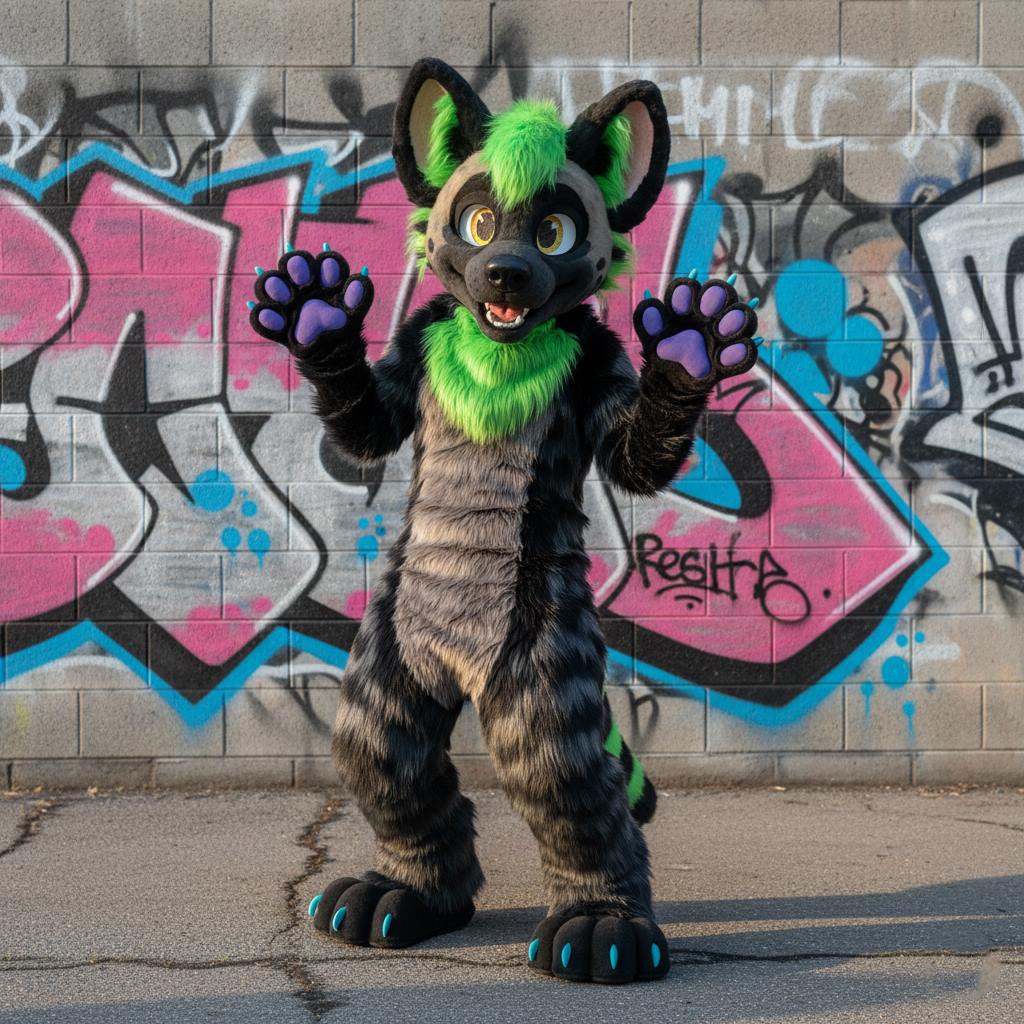
A fursuit is only as comfortable as the numbers it was built from. Most of the fit comes from a few simple measurements: your head circumference for the head, a hand tracing for the paws and your shoe size for the feet. Full bodysuits need more, and many makers ask for a duct tape dummy, a taped copy of your body shape. You only need one if your maker asks for it. This guide covers which measurements each suit type needs, how to take them, how a duct tape dummy works, the mistakes that ruin a fit, and a checklist.
Which measurements does each type of suit need?
Every maker has their own list, and their list always wins over any guide, including this one. Still, it helps to know what each measurement is for.
| Part of the suit | What makers commonly ask for | What it’s used for |
|---|---|---|
| Head | Head circumference; some makers also ask for a loop over the crown and under the chin, or your neck size | Sizing the base so the head sits snugly, stays put when you turn, and lines your eyes up with the vision areas |
| Hand paws | A hand tracing; sometimes wrist circumference or hand length | Patterning paws that fit your fingers without pinching or flopping |
| Feet paws | Shoe size; for some builds, the shoes themselves | Building feet the right length and width, with room for the sole |
| Tail | Rarely anything; sometimes where your belt or waistband sits | Placing the tail at a natural height |
| Bodysuit | A duct tape dummy or a set of body measurements, depending on the maker | Patterning the body, arms and legs, plus the padding on digitigrade legs |
So a head-only commission needs far less than a fullsuit, and a partial sits in between. If you are still choosing coverage, our mini partial vs partial guide and partial vs fullsuit comparison explain what each one includes.
What Fursuit Hub asks for: for fullsuits, we need your shoe size, a hand tracing and your head circumference, and we tell you exactly what to measure. A duct tape dummy isn’t on that list. For heads and partials, ask in your quote notes and we’ll confirm what we need.
Before you start: tools, timing and a helper
Gather these first:
- A soft tape measure, the bendy kind used for sewing. A metal DIY tape won’t follow the curve of your head. If you don’t have one, a piece of non-stretchy string and a ruler works.
- A helper. You can measure your own head, but a second person keeps the tape level at the back, where you can’t see it.
- Plain paper and a pen for the hand tracing, plus a ruler.
- Somewhere to write everything down, with units. “57” means nothing on its own; “57 cm” is a measurement.
On timing: measure when your maker asks, not months before. In our process, measurements come after you have agreed the quote in writing and paid the deposit, as step six on how a Fursuit Hub commission works. If your weight or hairstyle changes a lot before then, measure again.
How to measure your head circumference, step by step
Head circumference decides whether a head feels secure or wobbles every time you wave. Here is how to take it:
- Set your hair the way you’ll suit. If you’ll wear long hair in a low bun or braids under the head, put it like that now. If it will be flat under a balaclava, flatten it. Forgotten hair is a common reason a head ends up tight.
- Find the widest line. Place the tape on your forehead just above the eyebrows, run it over the tops of your ears, and around the fullest part of the back of your head.
- Keep it level. Use a mirror or your helper to check the tape hasn’t slipped down at the back. A tilted tape gives a bigger number.
- Snug, not tight. The tape should lie flat against your head without digging in. Don’t pull it as tight as you can, and don’t leave a gap.
- Read it where the tape meets the zero end, and write it down straight away, with the unit.
- Repeat it two or three times. If the results differ, measure again until two of them agree, and send that number. Don’t round down to look neater.
- Add your notes. Long or thick hair, a bun, glasses, hearing aids, piercings, or anything else that takes up room inside a head is worth a line.
Give the measurement in the unit your maker uses. If you aren’t sure, send both: one inch is exactly 2.54 cm, so 57 cm is about 22.4 in. Glasses don’t change your head circumference, but they do need space for the frames, so mention them. Our fursuit eyes and glasses guide covers how glasses, vision and fit work together inside a head.
How to make a hand tracing for fursuit paws
A hand tracing is a life-size outline of your hand that the maker uses to pattern your paws. Small slips make a big difference to how paws feel.
- Use plain paper on a hard, flat surface.
- Lay your hand flat and relaxed, with the fingers slightly apart, unless your maker asks for another pose. Don’t spread them as wide as they go; you won’t hold your hand like that in suit.
- Hold the pen upright. A pen tilted inwards draws a hand that is smaller than yours; tilted outwards, bigger. Ask your helper to trace your dominant hand if you can’t trace it neatly yourself.
- Trace all the way round, into the gaps between your fingers and down both sides to your wrist.
- Mark the wrist crease with a straight line, so the maker knows where the paw should end.
- Label it. Write “left” or “right”, your name and your character’s name on the sheet. If your hands are noticeably different sizes, trace both.
- Add scale. Draw a line exactly 10 cm (or 4 in) long with a ruler next to the hand. If you send a photo or scan, take it from directly above with the paper flat, so the maker can check the scale against that line.
Fursuit Hub paws are toony, puffy paws with minky pads, so the tracing sets the size of the hand inside the paw, not the final shape you see from outside. Mention if you need to use a phone in suit, if you have long nails, or if you want room for thin gloves underneath.
How to give your shoe size for feet paws
Shoe size causes confusion because sizes aren’t the same everywhere. A “size 9” in the US is not a UK 9, and US men’s and women’s sizes differ too. Get it right like this:
- Name the system. Write “EU 42”, “UK 8” or “US men’s 9”, not just “42” or “9”. We work with clients worldwide, so the label matters.
- Add your foot length if you can. Stand on a sheet of paper with your heel against a wall, mark the tip of your longest toe, and measure from the wall to the mark. It removes the guesswork if you are between sizes.
- Mention width and insoles. Wide feet, orthotic insoles or ankle supports all need space.
- Say where you’ll walk. Fursuit Hub feet come with indoor or outdoor soles. Tell us whether you’ll mostly be on carpet at cons or outside on pavements and grass.
Feet paws on a digitigrade fullsuit are shaped differently from plantigrade feet, and the leg padding changes how the whole suit looks. Our digitigrade vs plantigrade guide explains the difference before you choose.
What is a duct tape dummy, and do you need one?
A duct tape dummy (DTD) is a copy of your body shape made from tape. You put on a cheap, close-fitting layer, a helper wraps you in tape from the neck down, and then the shell is cut off you along a seam. The maker tapes it back together, stuffs it, and uses it like a tailor’s dummy to pattern a bodysuit that follows your exact shape.
Many makers ask for a DTD for fullsuits and bodysuits, because a body is harder to describe in numbers than a head or a hand. Others work from a list of body measurements, and some now offer alternatives such as 3D modelling. Heads, paws and partials usually don’t need a DTD at all.
The honest answer to “do I need a duct tape dummy?” is: only if your maker asks for one. Making one you weren’t asked for wastes an evening, tape and postage. For Fursuit Hub fullsuits, the measurements we list are shoe size, a hand tracing and head circumference. If you commission with us, wait for our list instead of taping yourself up in advance.
If your maker asks for a DTD: how to make one safely
Being wrapped in tape is warm and tiring, and in October 2026 one suiter joked online about being “trapped” in a duct tape dummy for over an hour.
- Read your maker’s DTD guide first. Makers differ on the pose (arms down in an A shape or out in a T), which areas to include (hands, feet, neck) and what to mark. Follow theirs exactly.
- Get at least one helper, two if you can. You cannot make a DTD alone, and you should never be left alone while taped.
- Wear a cheap base layer you’ll cut off, such as old close-fitting clothes or a disposable coverall. Never tape directly onto skin.
- Stand naturally. Feet hip-width apart, shoulders relaxed, the way you’ll stand in suit. A stiff, puffed-up pose builds that stiffness into your pattern.
- Tape in short, overlapping strips, close to the body but not tight. Snug is right; pressure marks or tingling fingers mean too tight. Loose tape at the armpits and crotch makes a baggy pattern.
- Mark the lines your maker asks for, often the centre front and back, waist, knees, elbows and where the tail sits, with a permanent marker before the dummy comes off.
- Cut it off carefully. Use blunt-ended safety scissors, such as bandage scissors, along one seam, usually up the back. Never use a craft knife or pointed scissors next to skin.
- Seal, label and pack it as your maker instructs, with your name and character name written on it.
Safety rules: keep the room cool, drink water, and keep tape well away from your face and loose around your neck. Stop and cut the dummy off straight away if you feel dizzy, faint, short of breath, numb or panicked. The fit of a costume is never worth feeling unwell.
Common measuring mistakes and how to fix them
| Mistake | What happens | How to avoid it |
|---|---|---|
| Tape slips down at the back of the head | The number comes out too big and the head can wobble | Use a mirror or a helper and keep the tape level all the way round |
| Forgetting how you’ll wear your hair | A head that is tight or presses on a bun | Measure with your hair styled the way you’ll suit, and say so |
| Pulling the tape tight “to be safe” | A head with no comfortable give | Snug against the skin, never digging in |
| No units, or the wrong ones | The maker has to guess between inches and centimetres | Always write cm or in, or give both |
| Tilted pen on the hand tracing | Paws that are too small or too big | Hold the pen upright and trace slowly |
| Photo of the tracing taken at an angle | The outline is distorted and can’t be scaled | Shoot from directly above, with a ruled reference line on the sheet |
| “Size 9” with no system | Feet built for the wrong length | Write EU, UK, or US men’s/women’s, plus foot length if you can |
| Making a DTD nobody asked for | Wasted time, tape and postage | Wait for your maker’s measurement list |
Example: what a clear set of measurements looks like
Here is an example layout for a fullsuit with Fursuit Hub. The numbers are only placeholders to show the format, so use your own:
- Head circumference: 57 cm (22.4 in), measured twice, over hair tied in a low bun. I wear slim glasses.
- Hand tracing: right hand (dominant), fingers slightly apart, wrist crease marked, 10 cm reference line on the sheet. Photo taken from directly above.
- Shoe size: EU 42 (foot length 26.5 cm). Slightly wide feet. Mostly indoors at cons, so indoor soles.
- Notes: I sometimes suit outdoors in summer. Please tell me if you need any other measurements.
Checklist: before you send your measurements
- ☐ I’m using my maker’s own measurement list, not a generic one
- ☐ Head measured two or three times, level, snug not tight, with my hair styled the way I’ll suit
- ☐ Every number has a unit (cm or in)
- ☐ Hand tracing done with an upright pen, wrist crease marked, labelled left or right
- ☐ A 10 cm or 4 in reference line on the tracing, and any photo taken from straight above
- ☐ Shoe size with its system (EU, UK, US men’s or women’s), plus foot length
- ☐ Glasses, hearing aids, long hair, wide feet or insoles mentioned
- ☐ Indoor or outdoor soles chosen
- ☐ A duct tape dummy made only if my maker asked for one, following their guide
- ☐ My name and character name on everything I send
Still choosing a maker? See our 10-point maker checklist and step-by-step commission guide.
Measurements for a Fursuit Hub commission
Every Fursuit Hub head is lined, with 3D follow-me eyes as standard, and is built from your ref sheet. Paws are toony and puffy with minky pads, and feet come with indoor or outdoor soles. For a fullsuit, we need your shoe size, a hand tracing and your head circumference, and we tell you exactly what to measure. Labor for a plantigrade fullsuit is €3,600+ and for a digitigrade fullsuit €3,800+; fur, VAT and shipping are extra, and your quote is the real figure.
The order is simple: send the quote form with your ref sheet, species, colors and suit type, and we usually reply in about a week with a price and a timeline. Once you agree the quote in writing, a non-refundable deposit reserves your slot, and then you send your measurements. If spreading the cost helps, choose “Monthly installment” as your budget option. We work with clients and ship worldwide, with prices in EUR for Europe and USD everywhere else; our worldwide shipping guide explains customs and VAT. Payments, sizing and the warranty are covered in our FAQ.
FAQ
What measurements do you need for a fursuit?
It depends on how much suit you order. Heads are built around your head circumference, hand paws around a hand tracing, and feet paws around your shoe size. Full bodysuits need the most: many makers ask for a duct tape dummy or a full set of body measurements. Always follow your own maker’s list.
How do you measure your head for a fursuit head?
Wrap a soft tape measure around the widest part of your head: just above the eyebrows, over the tops of the ears and around the fullest part of the back. Keep it level and snug, not tight. Measure two or three times, write down the units, and say how you’ll wear your hair.
Do I need a duct tape dummy for a fursuit?
Only if your maker asks for one. Many makers use a duct tape dummy for fullsuits and bodysuits, while heads, paws and partials usually only need measurements. For Fursuit Hub fullsuits, the listed measurements are shoe size, a hand tracing and head circumference, and we tell you exactly what to measure.
How do I make a hand tracing for fursuit paws?
Lay your hand flat on plain paper with your fingers slightly apart, unless your maker asks for another pose. Hold the pen upright and trace around every finger down to the wrist, then mark the wrist crease. Label left or right, and add a ruled line of known length so the scale can be checked.
Should I measure over my hair or glasses?
Measure the way you will actually wear the head. If you suit with long hair tied up, a bun or braids, measure with your hair like that and say so. Glasses don’t change the circumference, but tell your maker you wear them, so there’s room for the frames.
When do I send my measurements to Fursuit Hub?
After the quote. Measurements are step six of our process: you agree the quote in writing, pay the deposit to reserve your slot, and then send what we ask for. For fullsuits that is your shoe size, a hand tracing and your head circumference.